
.webp?language=en-US)


Seeding The Shoreline: A Living Armature for Pengambengan's Future
Hongyu Mao, Student International ASLA; Xinrui Man, Student International ASLA; Aiting Liu, Student International ASLA; Shudi Yang, Student International ASLA
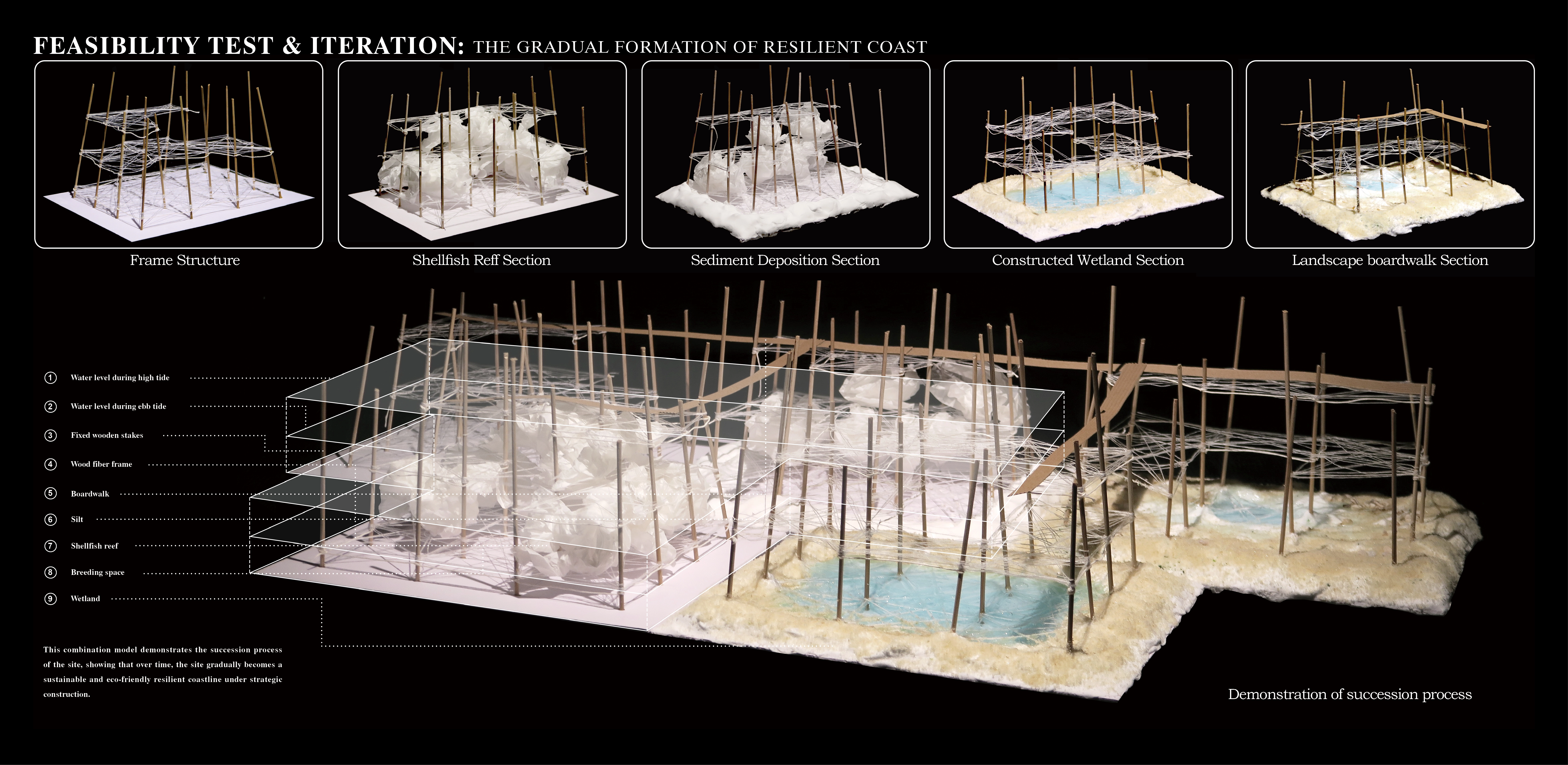
Interesting and ambitious project, appreciate the feasibility model.
Awards Jury
-
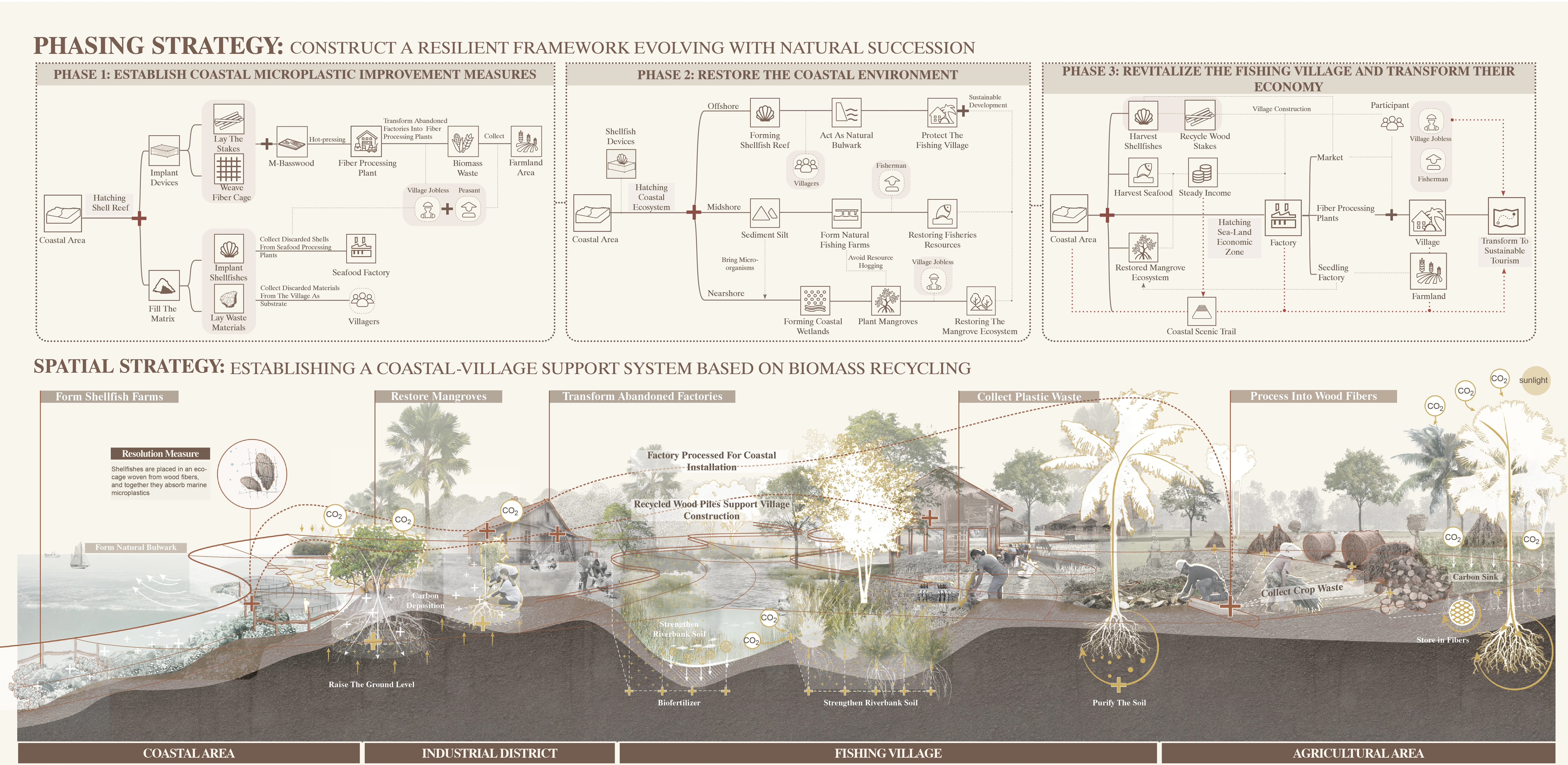
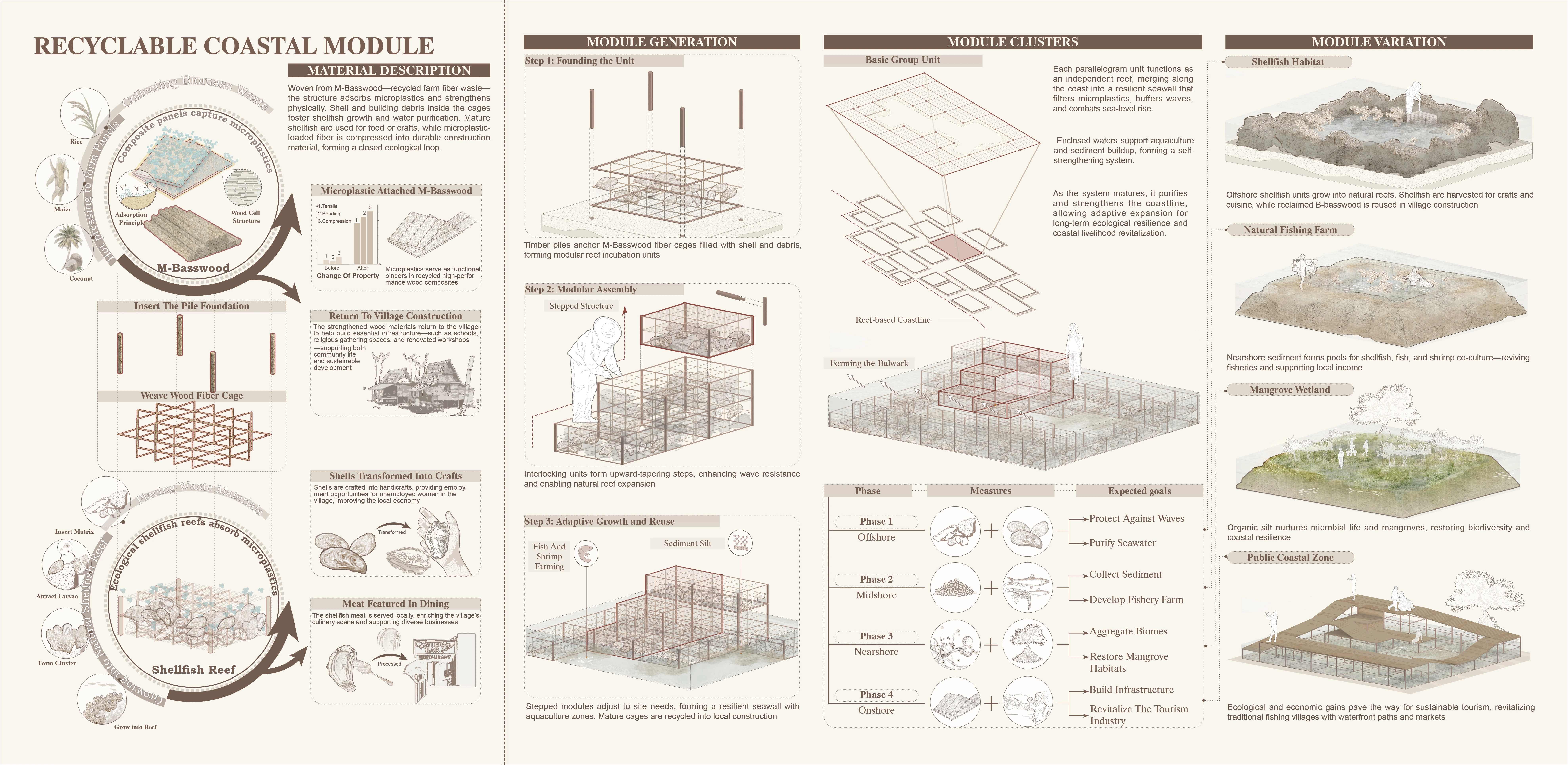
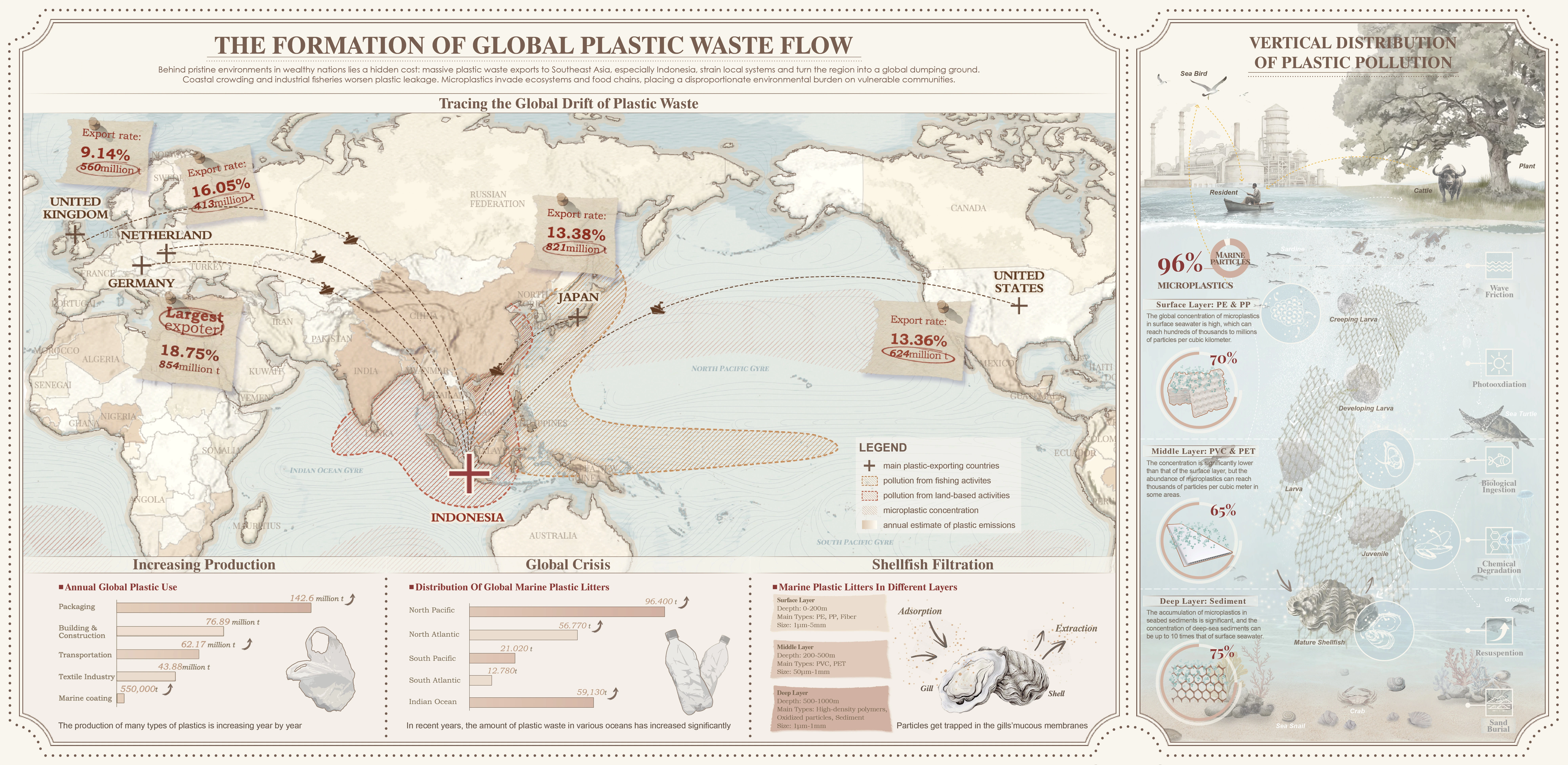
Southeast Asia’s coastal villages face converging crises: microplastic pollution, overexploited fisheries, and declining livelihoods. In Bali’s Pengambengan village, this project pilots a regenerative model rooted in shellfish reef ecology. Modular reef units—woven from recycled M-Basswood—foster shellfish growth, filter microplastics, and support aquaculture. Pollutant-laden fibers are repurposed into building panels, while harvested seafood feeds local businesses and crafts. A recycled plastic trestle links the village to restored tidal zones, drawing ecotourism. This evolving system offers a pathway to transform vulnerable fishing ports into resilient, self-sustaining coastal communities driven by ecological tourism.
-
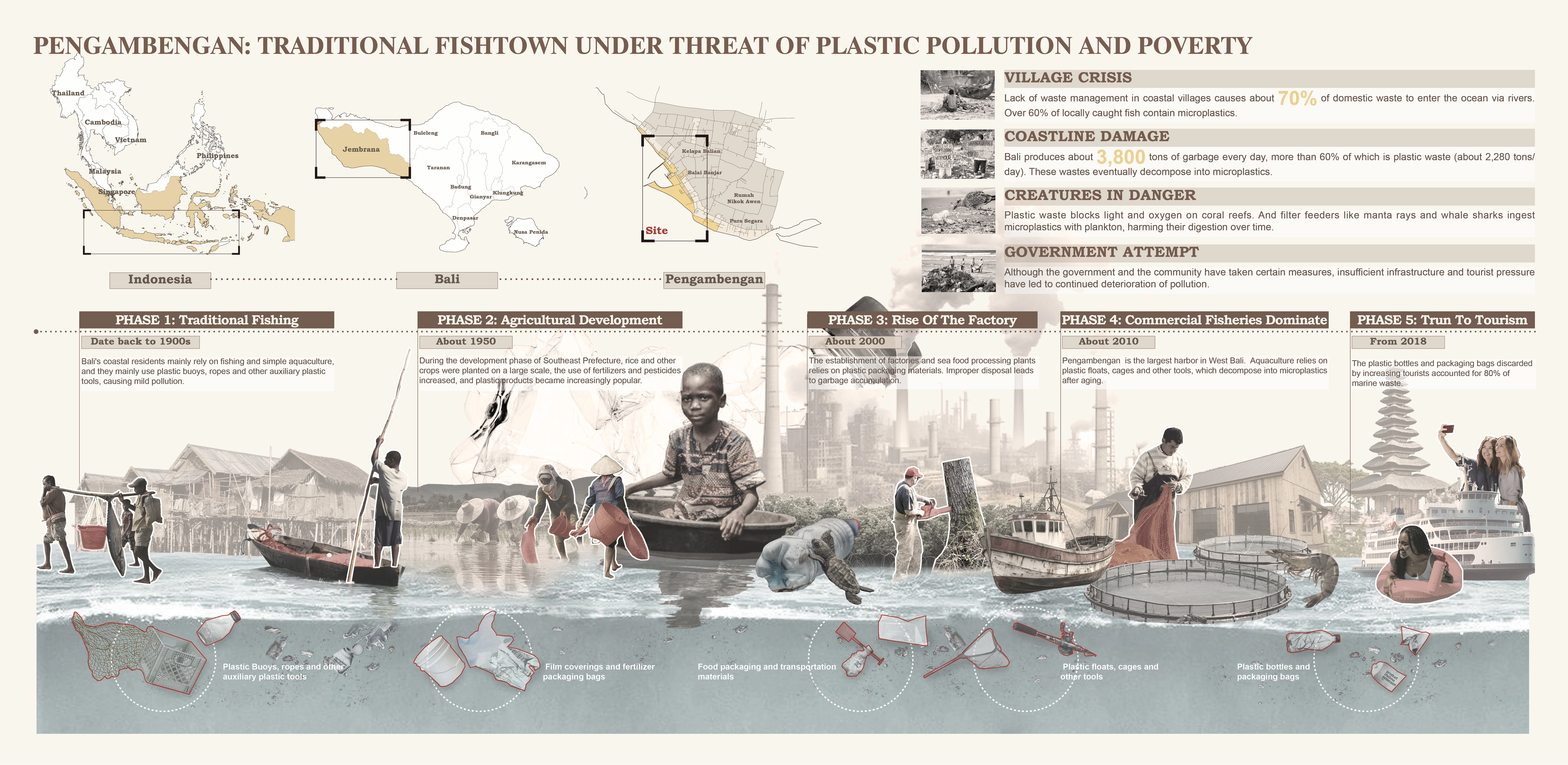
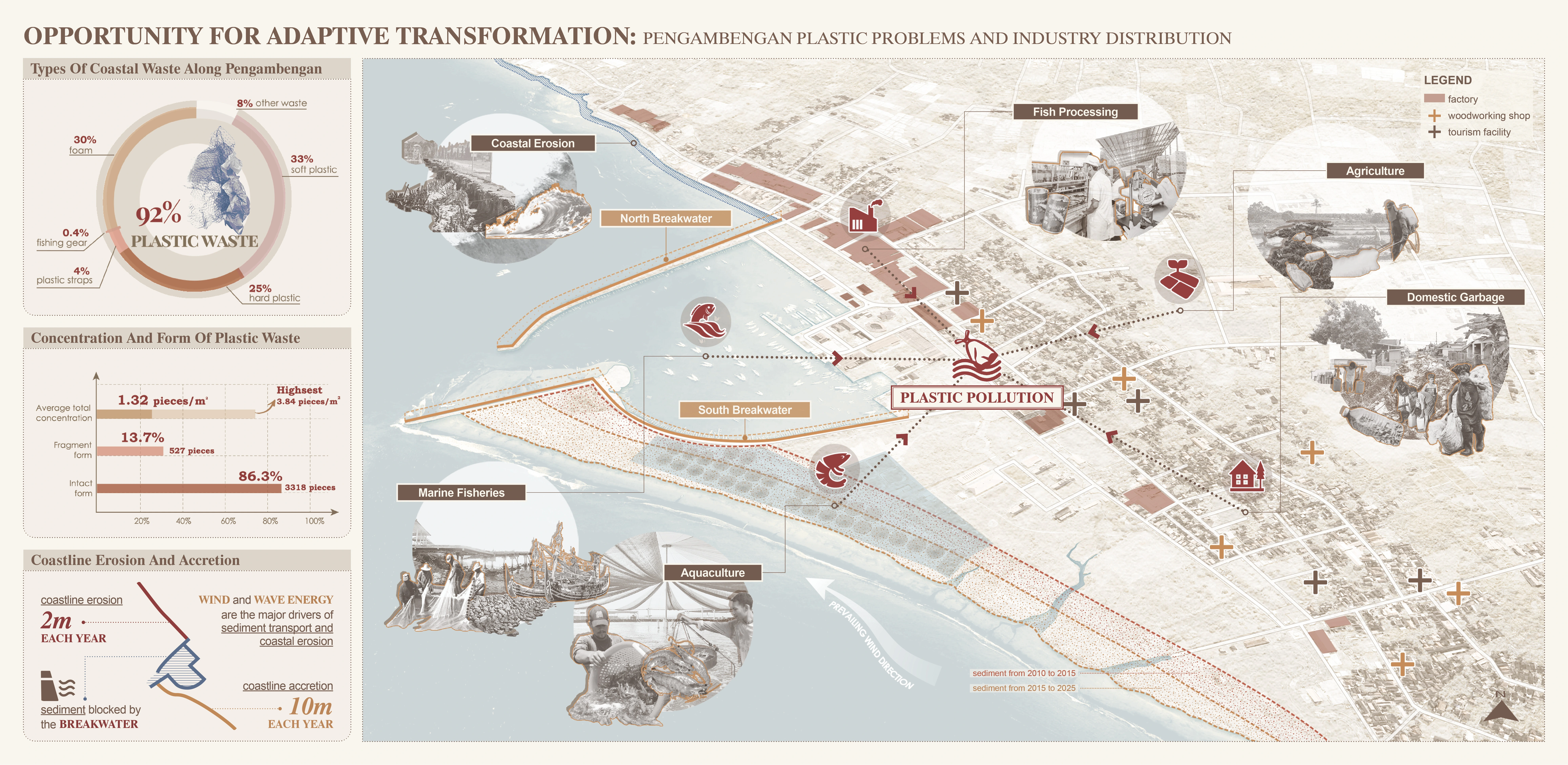
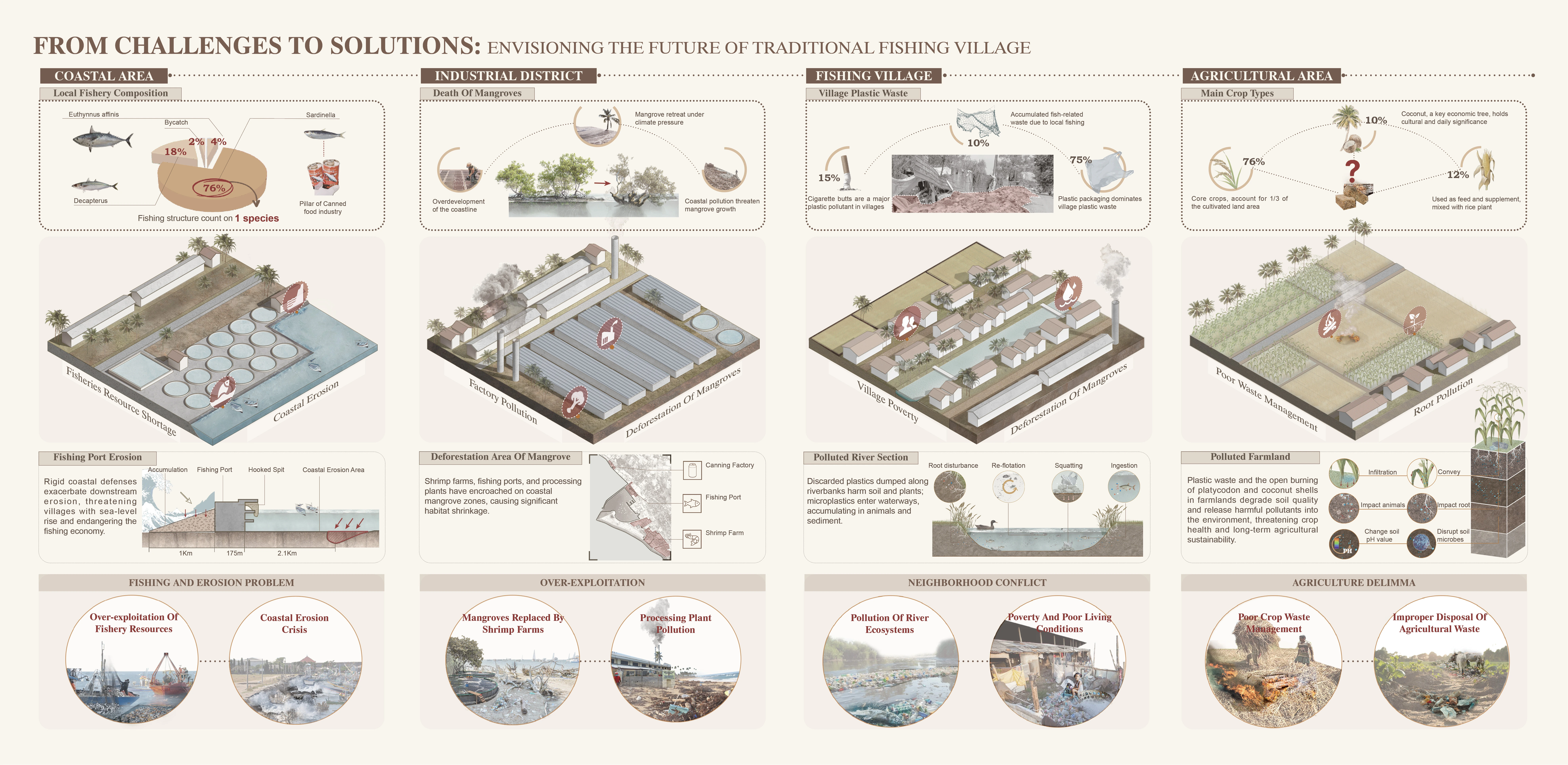
Bali faces severe microplastic pollution, with Indonesia recycling only 9% of its 400 million metric tons of annual plastic waste. Daily, 2,000 truckloads of plastic enter Bali’s waters, degrading into microplastics (<5mm)—“ocean PM2.5”—threatening ecosystems, fisheries, tourism, and human health. Pengambengan, a western Balinese fishing village, epitomizes this crisis, battling erosion, mangrove degradation, and pollution that undermine livelihoods and tourism.
Vision & Strategy
The project employs a "Shellfish Reef Eco-Matrix" to restore ecosystems and drive sustainability. Shellfish, as natural filters, process 50 gallons of seawater daily per adult, trapping microplastics via mucus and stabilizing sediments. Their reefs mitigate wave impact, enhance biodiversity, and enable aquaculture.
Implementation
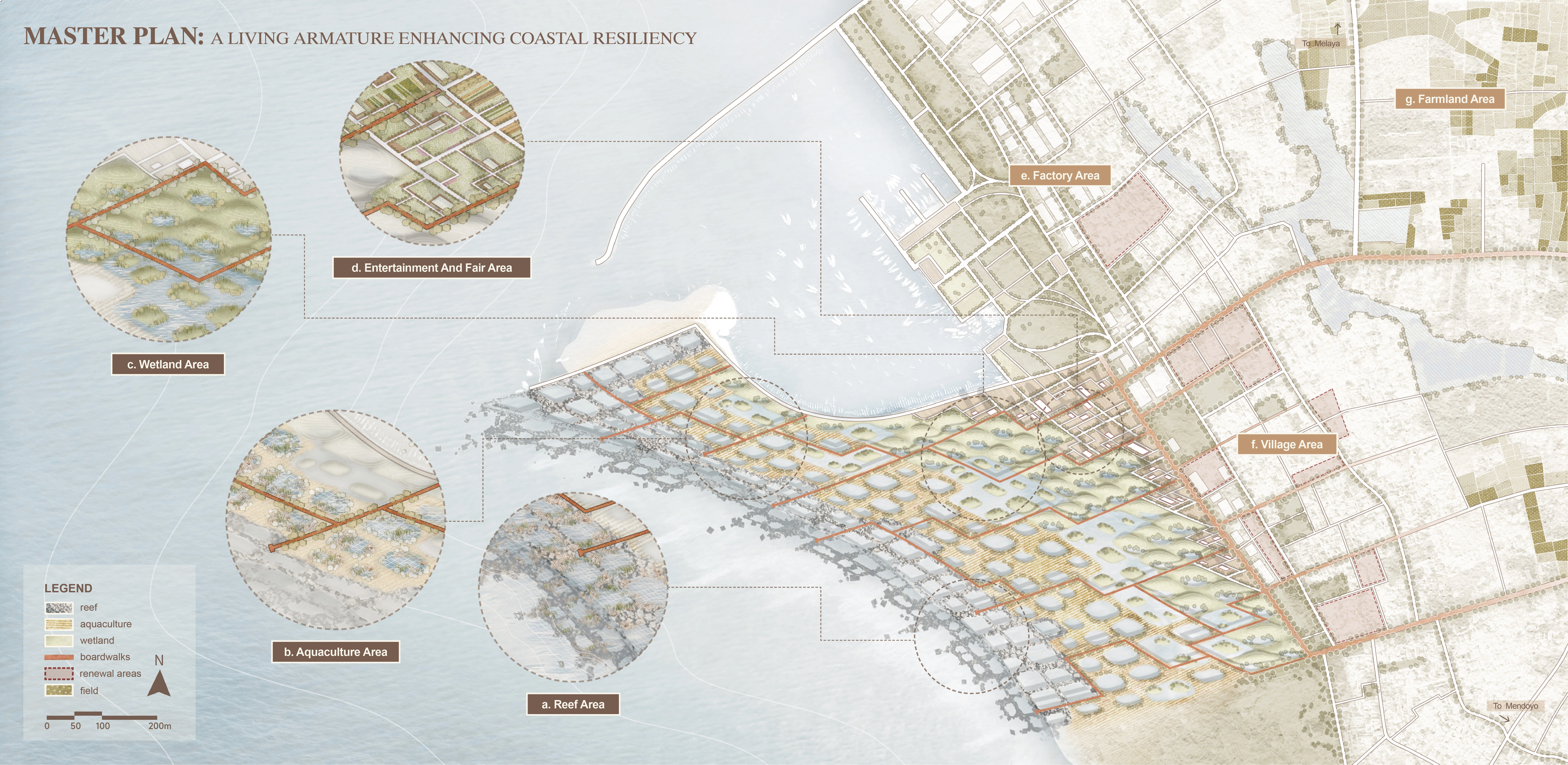
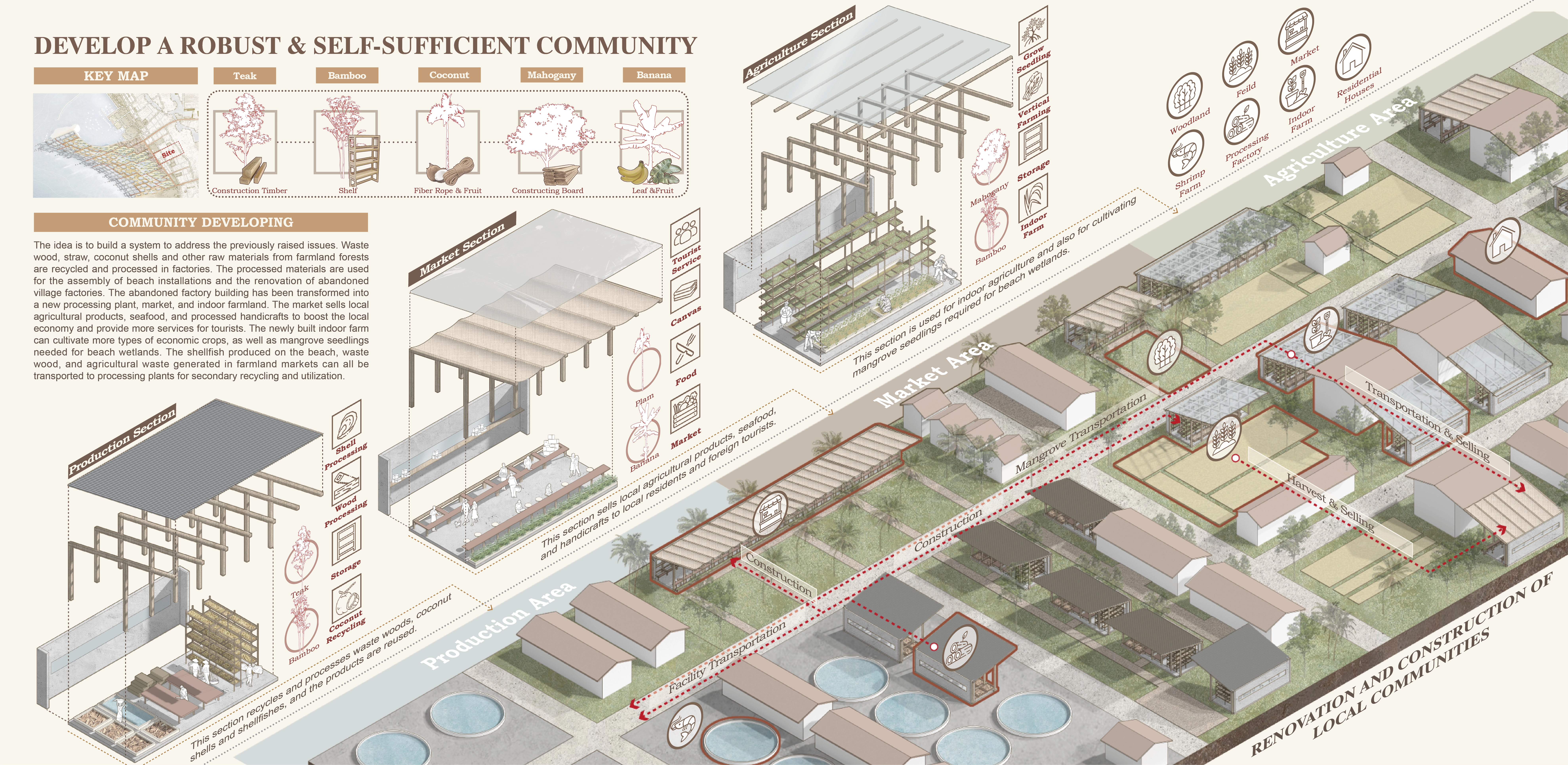
A 1.72-km shoreline system integrates modular structures made of M-Basswood (recycled wood fibers from agricultural waste). These form artificial reefs for shellfish attachment and microplastic capture. Hollow frameworks support aquaculture, while trapped microplastics are recycled as eco-panels for village construction, creating a “production-purification-reproduction” closed loop.
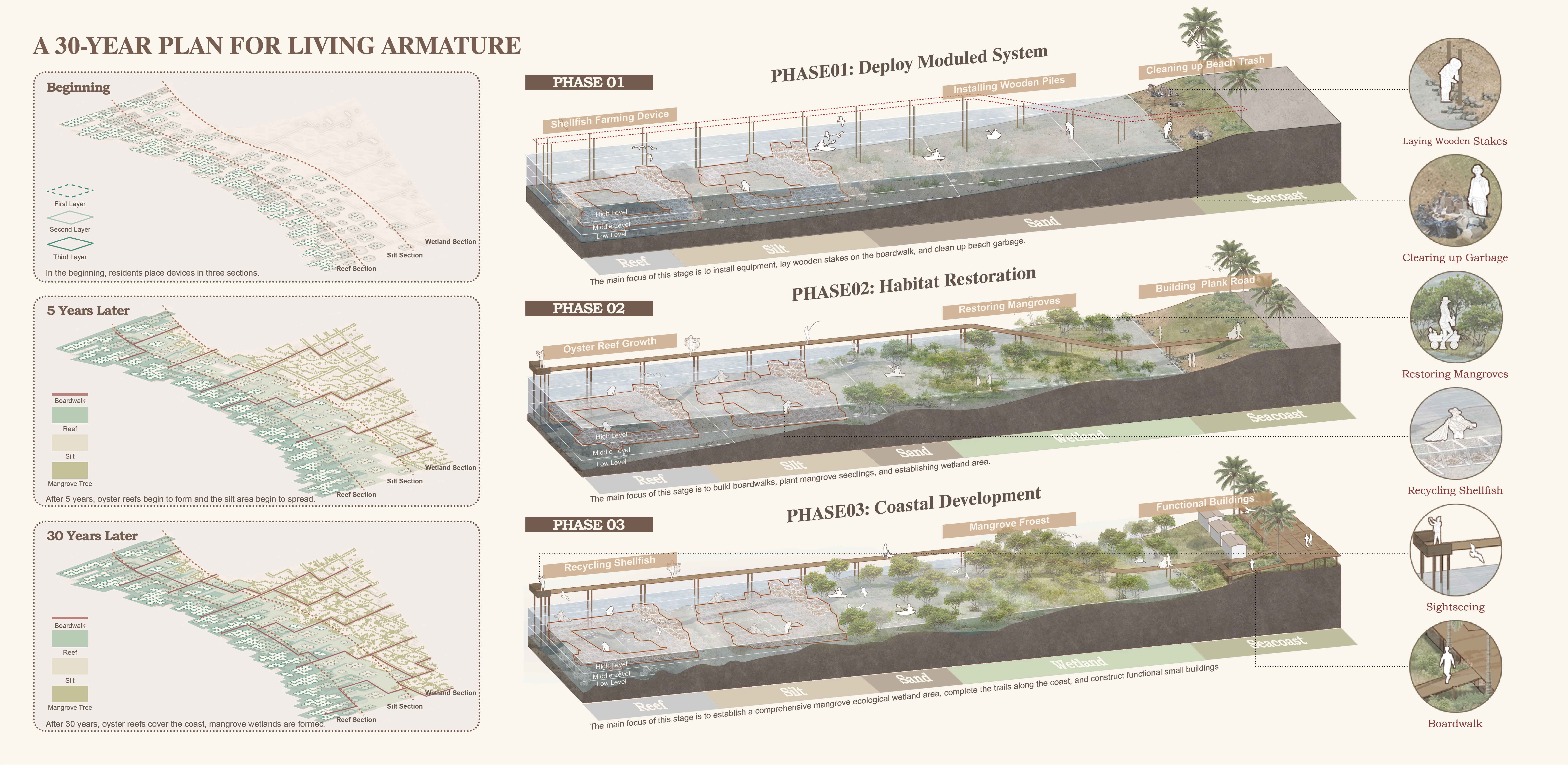
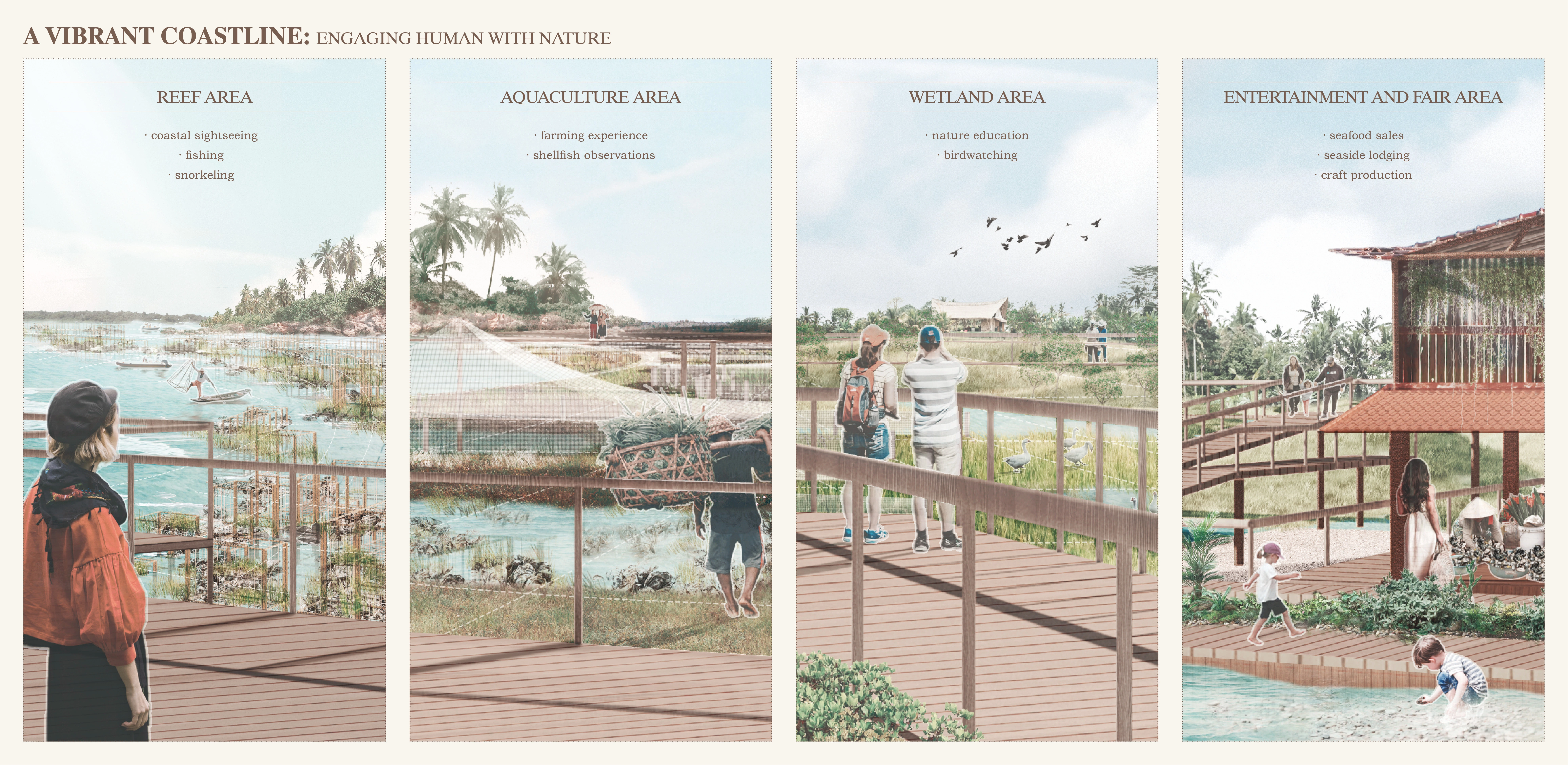
Shellfish meat supplies local restaurants; shells are crafted into handicrafts. A viewing trestle, built from recycled plastics, links the village to restored wetlands. Waves gradually reshape the shoreline, filling reefs with sediment to combat erosion. Degraded industrial zones transition into resilient wetlands, merging ecology with tourism appeal.
Long-Term Vision
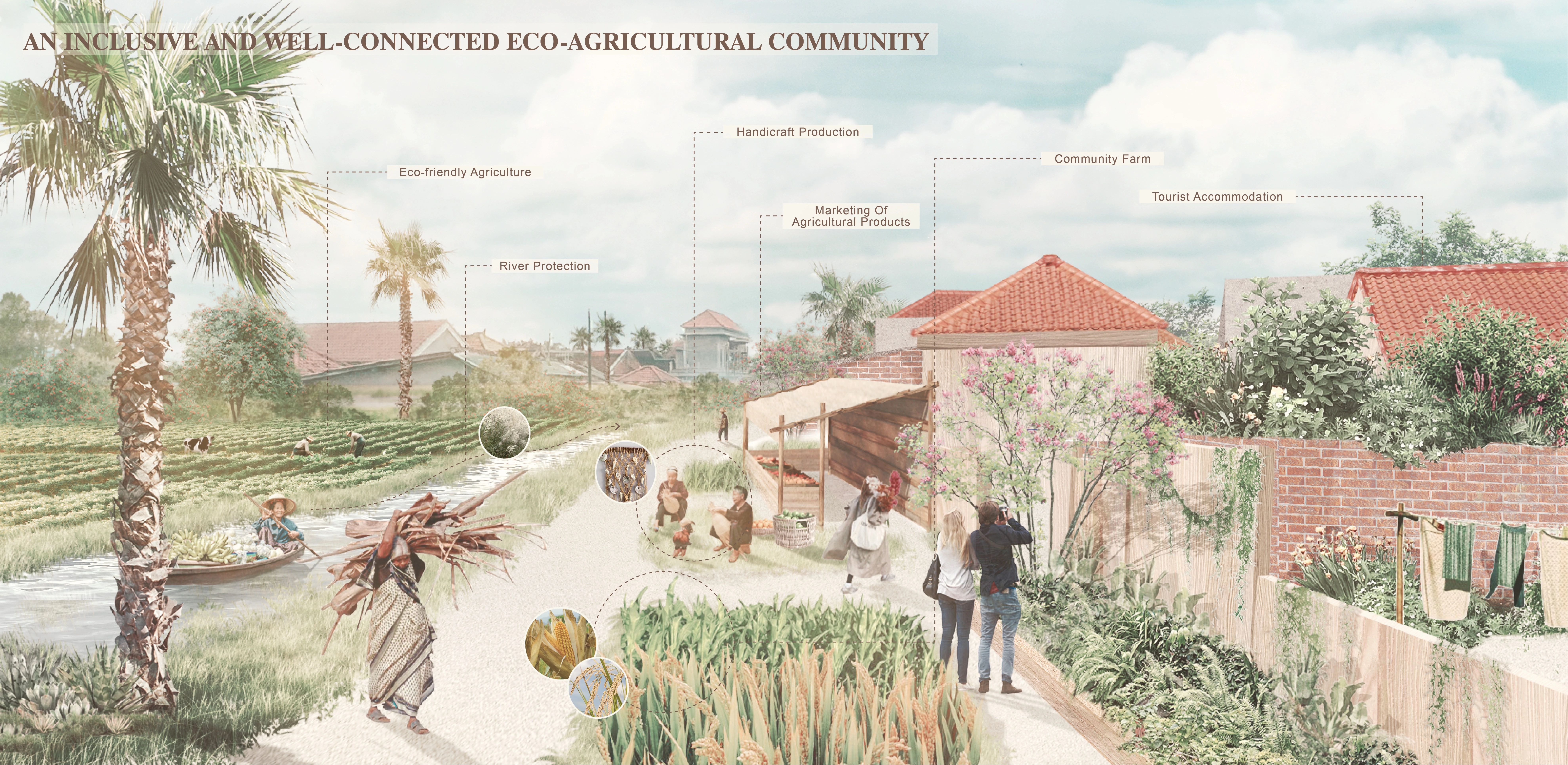
This model integrates ecological restoration, economic empowerment, and community engagement. By converting pollution into resources, Pengambengan evolves from “pollution victim” to “ecological beneficiary,” offering Bali a sustainable tourism blueprint. Success relies on scientific design, policy support, and local collaboration, fostering a resilient, eco-centric future for coastal communities.
Advertisement
Related Awards
Honor Award, General Design
Houston Arboretum & Nature Center
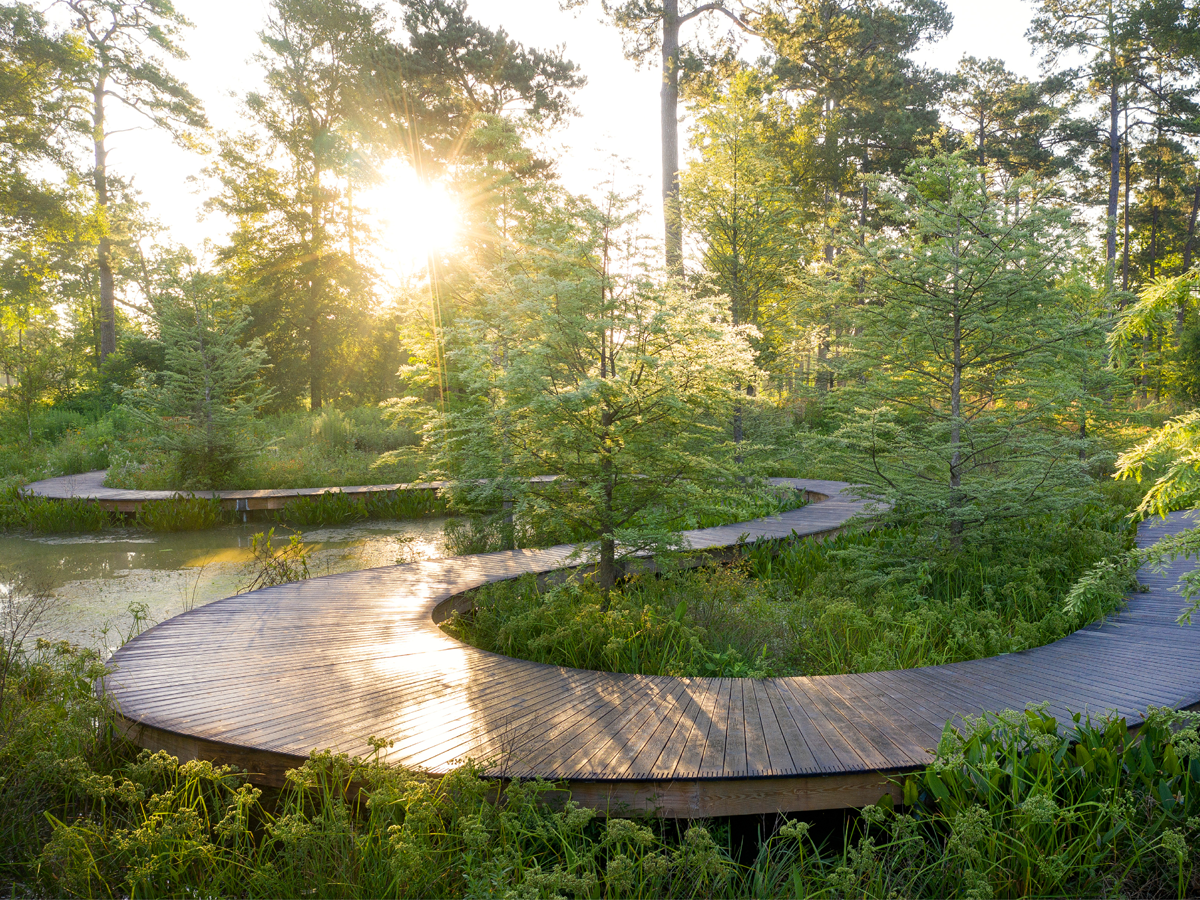
The Houston Arboretum & Nature Center sits within Memorial Park, one of the largest urban parks in the United States, in one of the nation's fastest growing and most climate-challenged cities. The site's story is one of repeated loss and deliberate reinvention. Hurricane Ike in 2008 and a severe drought in 2011 destroyed much of the Arboretum's tree canopy, exposing the limits of conventional reforestation in a city defined by flooding, heat, and ecological volatility.